Skip to content

Worldbuilding

Old gods and dreamers

While writing the Age of Frontiers lore for its different factions and sites, I remembered that the "old gods" already appear in Slave Pits, along with a few other references to the ancestors, or the dreamers, depending on who you ask. Let's dive into these terms.
Wood, carapace, iron

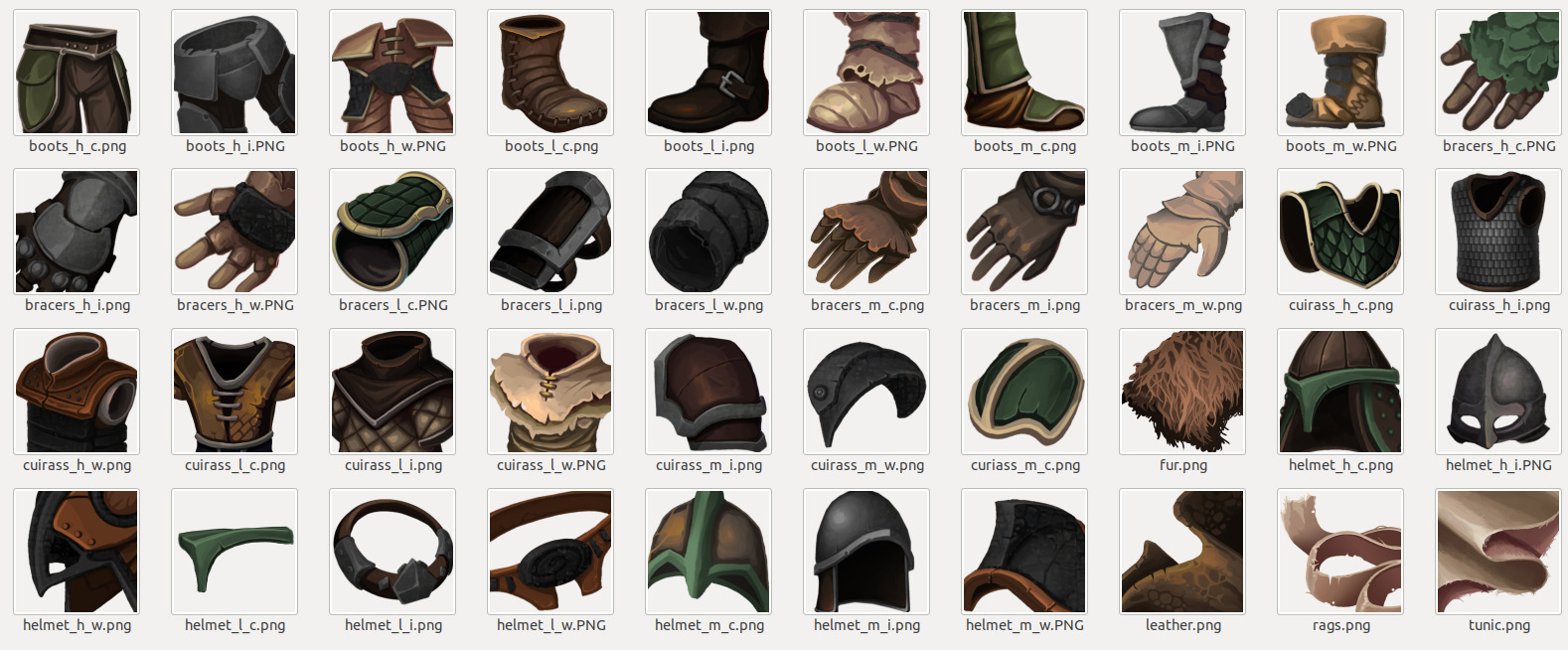
While working on Age of Frontiers, I've started making icons to give some shape to the world and its systems. This is how the equipment icons look right now (still work in progress). Each armour piece comes in light, medium and heavy versions, and in the three materials that matter: wood, carapace and iron:

A grid of Age of Frontiers equipment icons: boots, bracers, cuirasses and helmets in wood, carapace and iron, plus fur, leather, rags and a tunic

Impressions, writing and dreams

There isn't much to show of Age of Frontiers yet: its engine is at a very early stage. So, while re-reading my old posts, I noticed that I mention impressions as if everybody knew what they are, and it is probably not that clear. Let's fix that!

Why does everyone in Calima talk like that?

Let's address the elephant in the room: the language in Calima is a tough sell. The first pages of Descent throw lines at you like "I impression that citizens have not recorded well enough its content", and you could easily think something went wrong in the editing. Nothing did. It was designed like this, on purpose, and this post is about why.

Three ways to read Calima

Spoilers for Descent

This post talks about what happens in Descent, including its ending. If you haven't read it yet, you may want to read it first. You can start with its free first third, on the Downloads page.

People who have read Descent sometimes ask me what is really going on in Calima. The honest answer is that I won't tell you, because the saga is built so that you can decide. There are three ways to read it, from the most real to the most manipulated by Omega, the ship's AI.